
Types of Braces
Discover the Perfect Orthodontic Solution for Your Unique Smile
One of the most exciting parts of starting orthodontic treatment is choosing how you want to get there. At Rawlins Orthodontics, we offer three treatment options: hi-tech metal braces, clear ceramic braces, and clear aligners. Each one works differently and fits a different kind of patient, lifestyle, and clinical situation.
The right choice isn’t about which option looks most impressive on a website. It’s about which one is right for your teeth, your life, and your goals. That’s exactly what R. Baker Rawlins II, DMD, MS walks you through at your free consultation: a clear, honest recommendation based on your clinical needs, with no pressure and no guesswork.
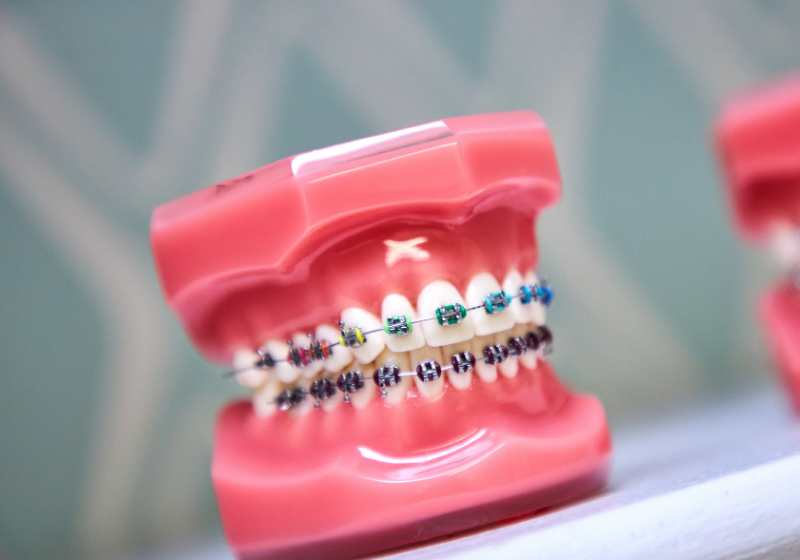
HI-TECH METAL BRACES
Hi-Tech metal braces are the most common type of braces and are more comfortable today than ever before. Made of high-grade stainless steel and designed for less friction (speed!), metal braces straighten your teeth using metal brackets and space-age wires making treatment faster than with traditional metal braces. You have the option of adding colored elastics (rubber bands) for a more unique and colorful smile. We get it! You want colors! Colors are awesome!
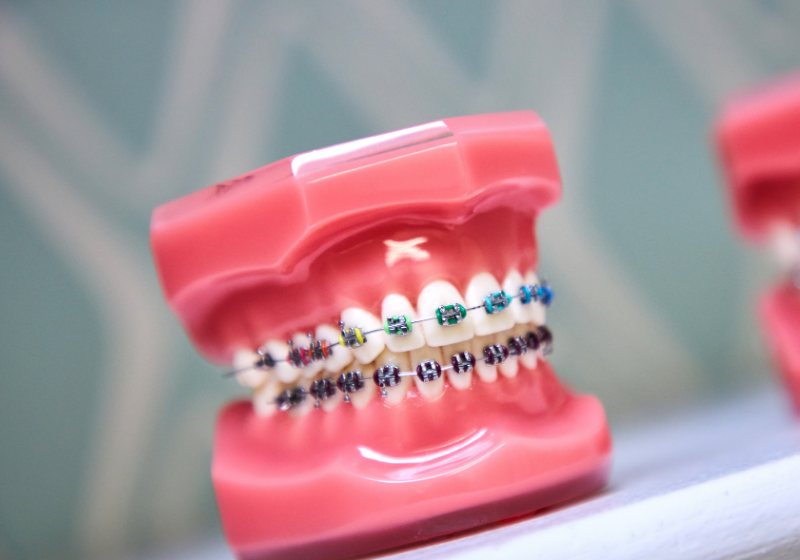
CLEAR (CERAMIC) BRACES
Ceramic braces are made of clear materials and are therefore less visible on your teeth than metal braces. For this reason, clear braces are used mainly on patients who have cosmetic concerns. While they are visually less prominent, they do require more attention to oral hygiene as ceramic braces are larger and are more brittle than metal braces. For these reasons, ceramic braces tend to be used more on upper front teeth than on lower teeth.
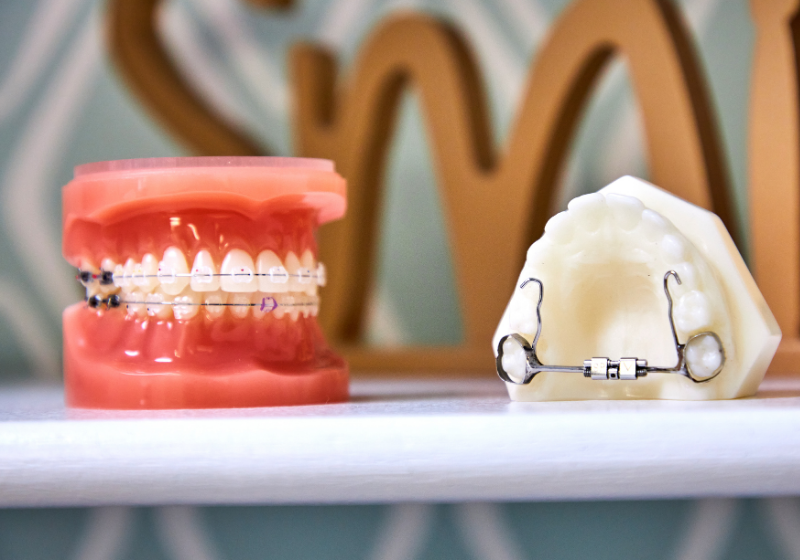

CLEAR ALIGNERS
Clear aligners are a series of invisible, removable, and comfortable plastic trays that straighten your teeth like braces. Not only are the aligners invisible, they are removable, so you can eat and drink what you want while in treatment, plus brushing and flossing are less of a hassle. The aligners are comfortable and have no metal to cause mouth abrasions during treatment.
What to Know About Metal Braces
Not Sure Which Option Is Right For You?
Dr. Rawlins will help you choose the best treatment option based on your unique needs and goals.
Braces vs. Clear Aligners: A Side-by-Side Look
Both braces and clear aligners are proven, effective treatment options. One is not inherently better than the other. The right choice depends on the complexity of the case, the patient’s age, and their lifestyle. Here’s a quick reference comparison:
| Visibility | Visible brackets and wires. Metal or ceramic (tooth-colored) options available. | Virtually invisible clear plastic trays. |
| Removability | Fixed to the teeth throughout treatment. No action required. | Removable, but must be worn at least 22 hours every day. |
| Diet | Avoid hard, sticky, and crunchy foods. | Remove aligners for meals. No food restrictions. |
| Hygiene | Requires careful brushing and flossing around brackets and wires. | Easier oral hygiene, but teeth must be clean before aligners are replaced. |
| Discomfort | Mild soreness after placement or adjustment. Short-lived. | Mild pressure when switching to a new tray. Easily managed. |
| Treatment Scope | Addresses most orthodontic problems, including complex cases. | Effective for many cases. Suitability depends on the individual. |
How the Right Option Gets Chosen
There is no single right way to do orthodontic treatment. What matters most is an accurate diagnosis and a treatment plan built around the individual patient, not a preference for any particular appliance.
At your free consultation, R. Baker Rawlins II, DMD, MS will take a full set of orthodontic records, including digital X-rays, photographs, and a 3D iTero scan. From there, he’ll identify exactly what needs to be corrected and explain the options that are clinically appropriate for your case. If more than one option is suitable, Dr. Rawlins will walk you through the differences so you can make a confident, informed decision.
Families throughout Wilmington, Hockessin, Pike Creek, and Newark, Delaware, as well as communities in Pennsylvania, New Jersey, and Maryland, including Kennett Square, Avondale, and Elkton, trust Rawlins Orthodontics for personalized, Board-Certified care that puts the patient first. We’d love to meet you and help you find the right path to your best smile.